
Reverse Mortgage Loans
How reverse mortgage loans work
Reverse mortgage loans let qualifying homeowners borrow against part of the equity in their home. Depending on the loan, funds may be received in a lump sum, through scheduled payments, or as a line of credit. Interest and fees are generally added to the balance, so the amount owed can grow over time. The home remains the borrower’s property, with the loan secured by it.
Reverse mortgage loan age and eligibility
For an FHA-insured Home Equity Conversion Mortgage (HECM), borrowers generally must be at least 62 years old, occupy the home as their principal residence, meet program and financial requirements, and complete HUD-approved counseling. Other reverse-mortgage products may have different eligibility rules. Confirm the requirements for the specific loan and property before making plans.
For many reverse mortgages, repayment may be due when a triggering event occurs under the loan documents, such as the last borrower selling the home, moving out, or dying. The exact timing and rules depend on the loan type and borrower circumstances.
Responsibilities and risks to consider
With a HECM reverse mortgage, borrowers must keep the home as their principal residence, maintain it, and pay property charges such as property taxes and homeowners insurance. Not meeting these obligations can put the loan in default and risk foreclosure. Other reverse-mortgage products may have different terms.
As interest and fees accrue, the loan balance can increase and the homeowner’s remaining equity can decrease. Consider how that may affect a future move, other housing costs, and what may remain for heirs. Compare total costs, payment choices, servicing terms, and what happens if a borrower’s living situation changes.
Questions to ask before choosing a reverse mortgage
- What type of reverse mortgage is being discussed, and what are its eligibility and property requirements?
- What upfront and ongoing costs apply, and how could the balance change over time?
- How are funds made available, and can the payment or interest rate change?
- What events make the loan due, and what options may be available to a spouse or heirs?
- How will property taxes, insurance, maintenance, and other housing expenses be paid?
- What alternatives could meet the same financial goal with different costs or risks?
Independent information and next steps
If you are considering a HECM, speak with a HUD-approved reverse-mortgage counselor before deciding. Read the CFPB’s explanation of borrower responsibilities and its guidance on when repayment may be due. For FHA HECM program information, consult HUD’s HECM resource.
If you are comparing ways to use home equity, see our home equity line of credit (HELOC) overview. A HELOC and a reverse mortgage work differently, so compare their costs, repayment structures, and risks for your situation.
This page is general education, not a loan offer or a determination of eligibility. Product availability, terms, costs, and qualification depend on the provider, property, location, and individual circumstances. Confirm current availability and licensing before pursuing an application.
Could a reverse mortgage fit your plans?
Watch NorthStar Funding’s 2½-minute introduction to HECM reverse mortgages: possible benefits, costs, homeowner responsibilities, repayment and alternatives. This is education, not a loan offer or a determination of eligibility.
English audio with English and Spanish subtitles. Use the player’s CC and Settings controls. Audio en inglés; subtítulos en inglés y español disponibles en CC y Configuración.
Watch the NorthStar Funding reverse-mortgage video on YouTube. English and Spanish captions are available. You can also read the transcript below.
Ask NorthStar Funding about your reverse-mortgage questions — compare the costs, obligations and alternatives before deciding.
Read the video transcript
How a HECM uses home equity
If your home holds much of your savings, a reverse mortgage may be worth understanding. The most common type is a Home Equity Conversion Mortgage, or HECM. It is insured by the Federal Housing Administration and is for eligible homeowners age sixty-two or older.
It turns some equity into borrowed funds. Any existing mortgage must be paid off at closing. Using proceeds for that payoff may free up monthly cash flow, but leaves less for other needs.
Ownership, ongoing costs, and repayment
You keep ownership. No monthly principal-and-interest payments are required while you meet the loan’s requirements. You still pay taxes, insurance and applicable association charges, maintain the home, and meet occupancy requirements. Missing obligations can put the home at risk.
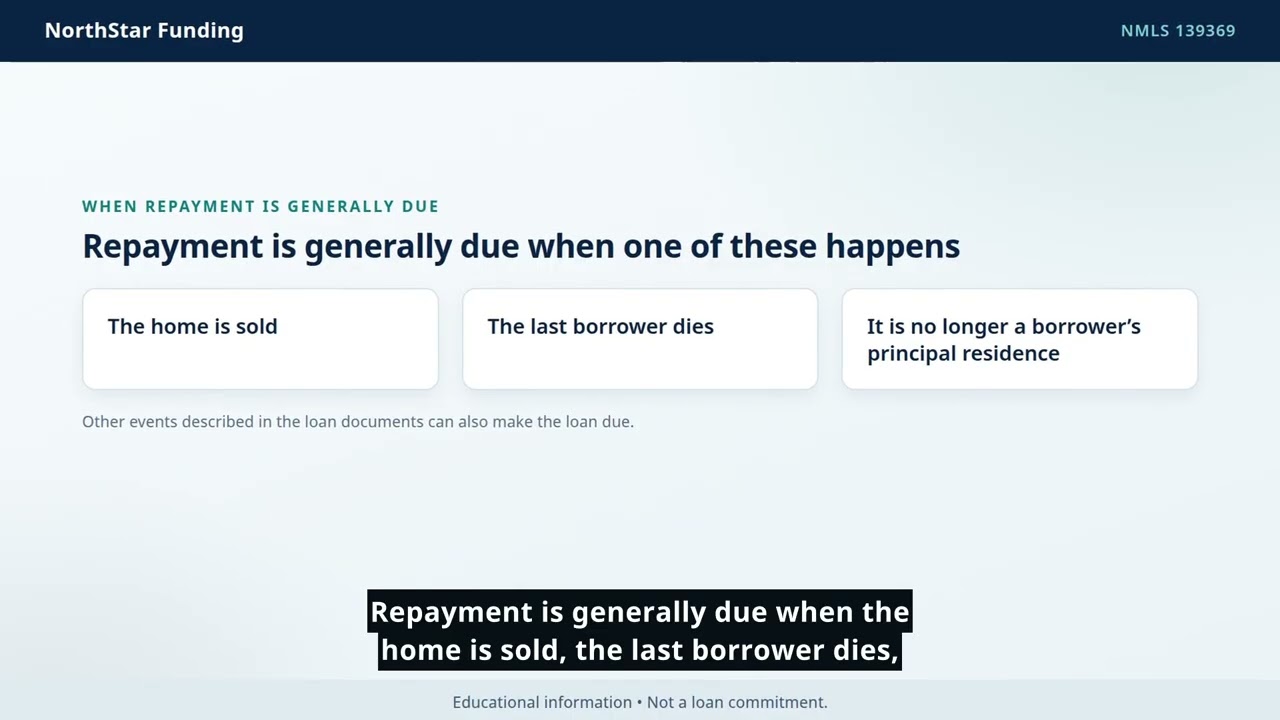
Interest and fees increase the debt and use equity. Repayment is generally due when the home is sold, the last borrower dies, or it is no longer a borrower’s principal residence. An eligible non-borrowing spouse may qualify to delay repayment under specific conditions. Discuss protections and your heirs’ plans before borrowing.
Compare the choices with your budget
Imagine a homeowner who plans to stay for years and can afford ongoing housing costs. Funds may help with expenses or repairs. Someone moving soon, or unable to cover those costs, may need another approach.
Compare assistance, downsizing, refinancing or a home-equity loan. Those loans usually require monthly payments and qualification. HECM counseling and financial review are required. If you receive SSI or Medicaid, ask how holding proceeds could affect benefits.
A HUD-approved counselor can help you compare the choices with your budget and plans. You deserve a clear explanation before deciding.